Every operating decision is a capital allocation decision. Here is the cycle.
Frameworks locate where enterprise value is sitting in the cycle; the operating tools tell you what to act on once you find it.
Grouped by stage of the cycle. See the thesis for the full lattice.
Find
· Where are the mispriced edges in the operating graph?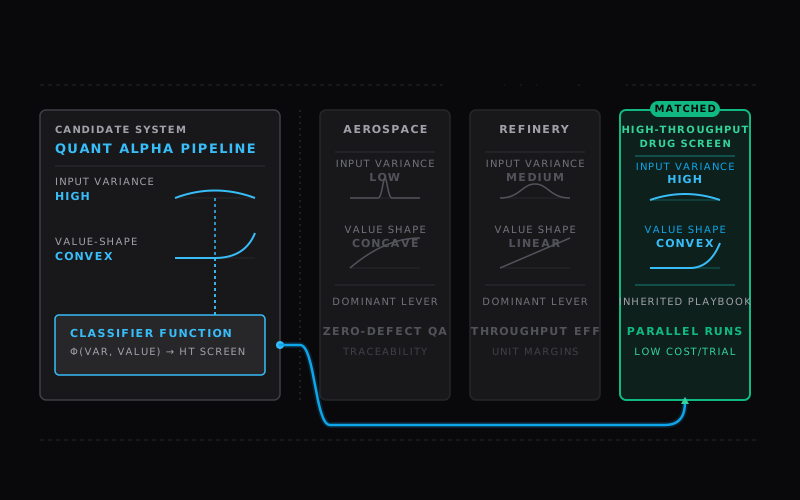
Knowledge work is manufacturing - but which factory? The archetype to borrow from is a function of your input, process, and output signature. Name it and inherit a mature industry's operations playbook. Work in progress, building in public.
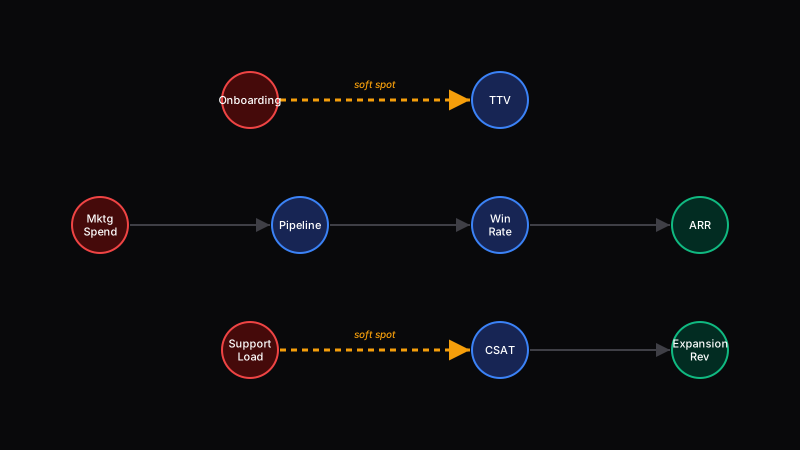
Every cost and revenue line is a node. Every causal relationship is an edge. Walk the graph and find the mispriced edges where value is leaking.
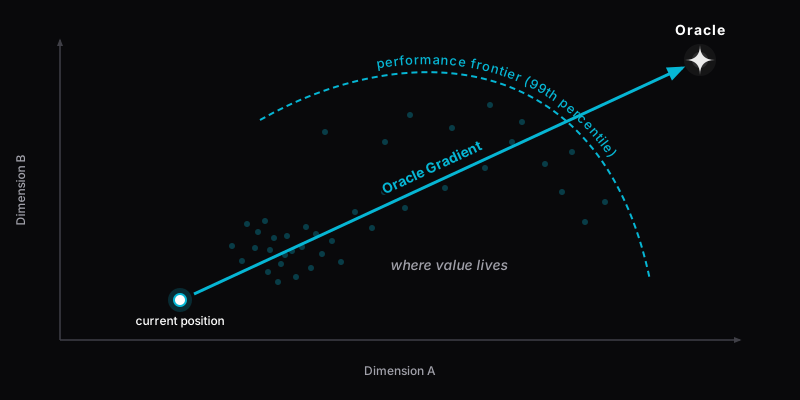
A protocol for locating where excellence lives when nobody agrees what good looks like. Map the distribution, find the 99th percentile, compute the gradient toward it.
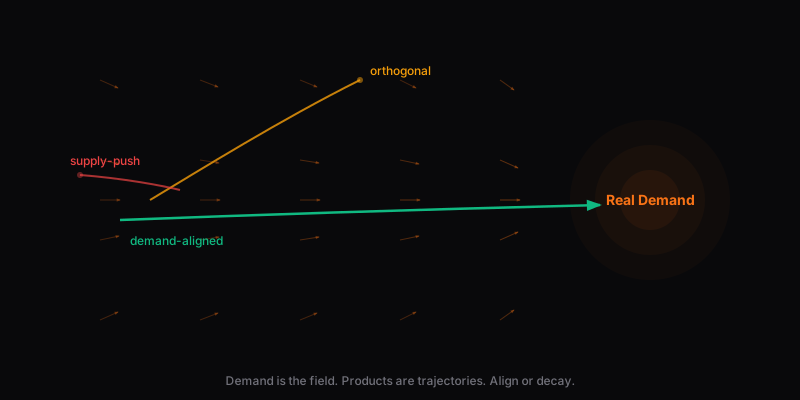
Demand is a force field on your optimization landscape. It is fixed, hidden, and acts on your product whether you measure it or not. Map it or crash into it.
Characterize
· What is the return distribution of this opportunity?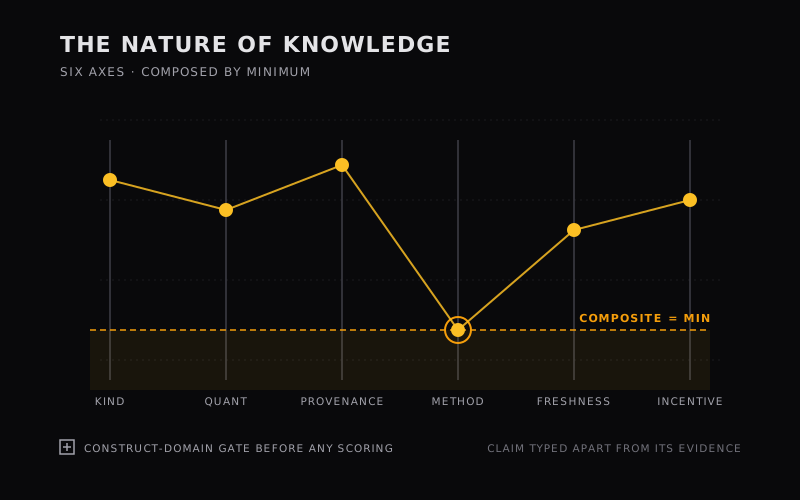
Construct
· Which instruments, in what combination, given risk tolerance?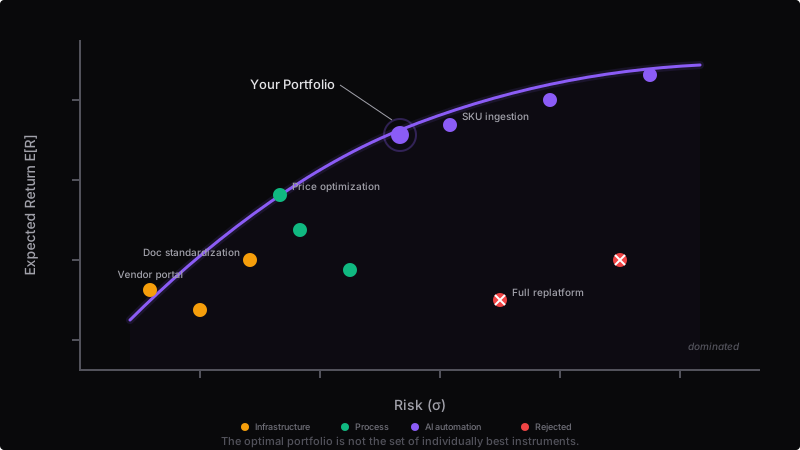
Every operating decision is a capital allocation decision. Rank instruments by risk-adjusted return, map your tolerances, handle correlations, and construct the portfolio. Markowitz (1952) applied to operating investments.
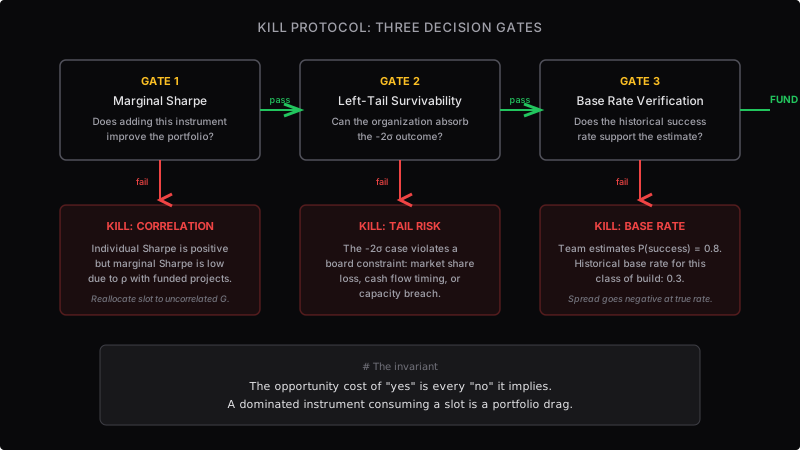
The most important allocator skill is saying no. Three decision gates for identifying dominated instruments - marginal Sharpe, left-tail survivability, base rate verification - and reallocating the slot.
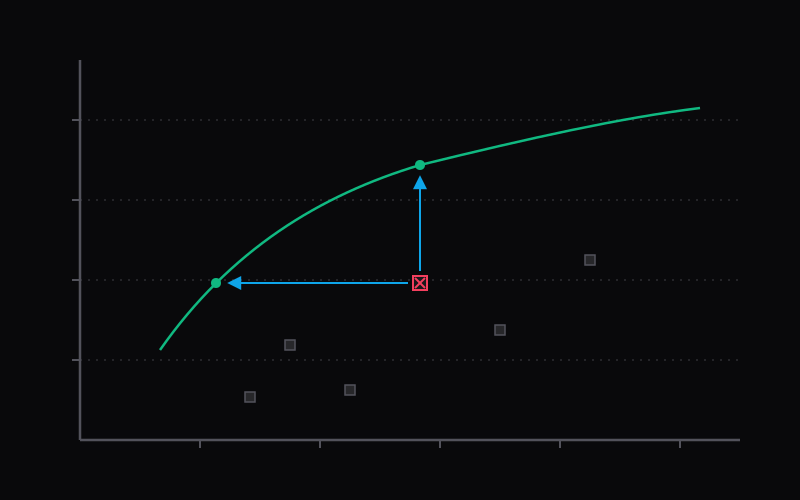
Markowitz (1952) applied to operating investments. The set of portfolios that maximize expected return at each level of risk. By definition, points below the frontier are dominated; the question is which point the firm wants.
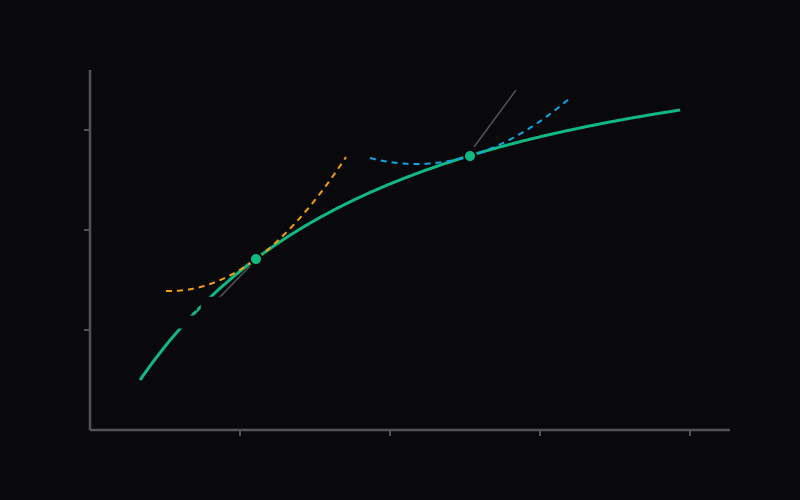
The function that maps firm-level constraints - cash, runway, covenants, narrative - into the preferred point on the efficient frontier. Two firms with identical inputs pick different points. Both can be correct.
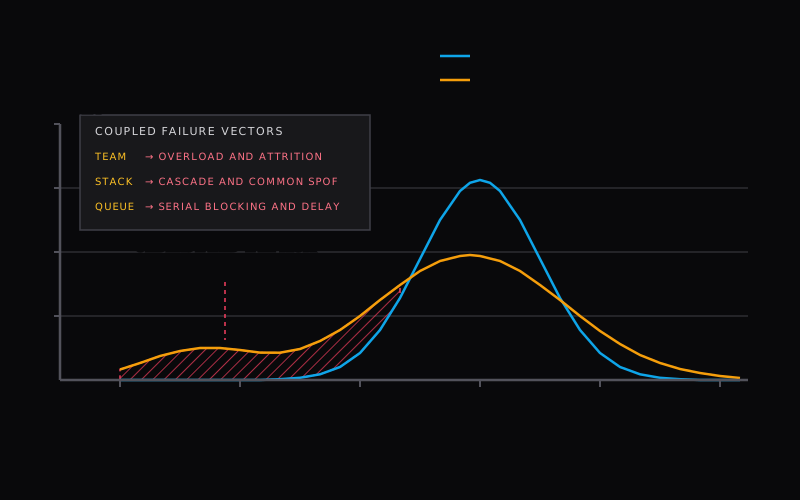
Operating portfolios are not sums of individual NPVs. Two projects that share a team, stack, or review queue share a failure mode. Correlation is the input that makes Stage 3 different from Stage 2.
Execute
· How do you realize the returns?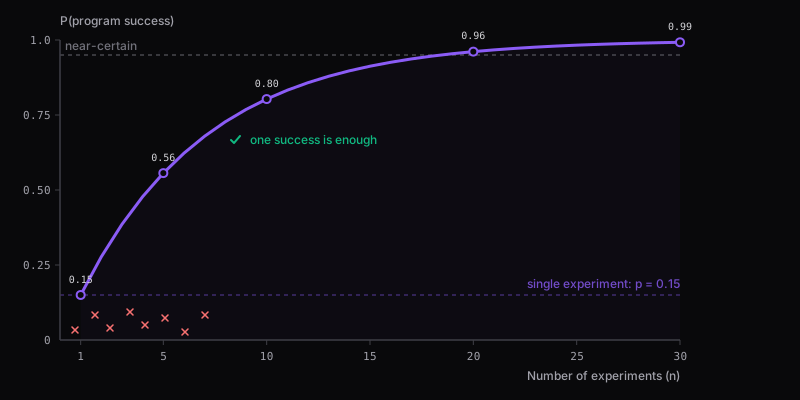
Design the game so that convergence to the desired outcome is a structural guarantee, not a hope. Mechanism design meets Bayesian ratchet search.
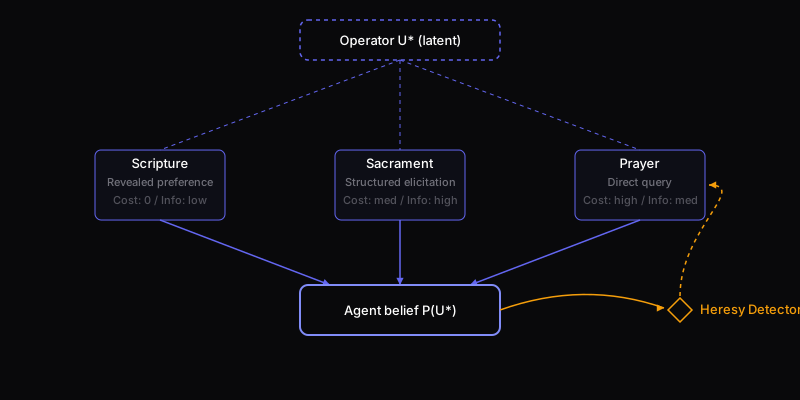
Your AI is trying to serve you but cannot read your mind. Three evidence channels for learning what the operator actually wants: structured elicitation, revealed preference, and direct query.
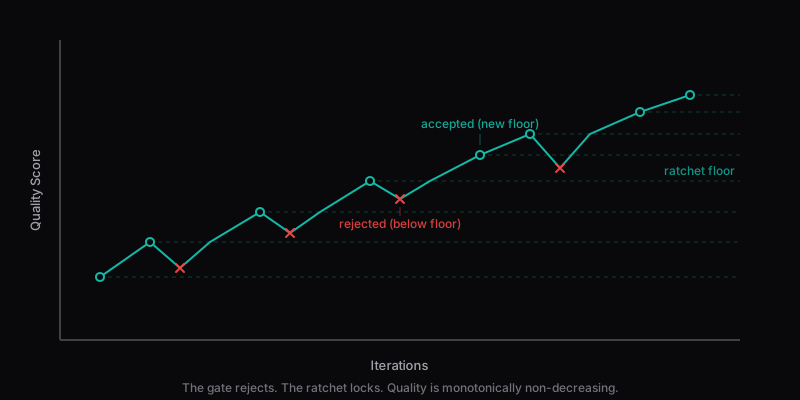
Apply ratcheted quality gates to stochastic agent output. The agent doesn't need a plan - the gates create ascent. Rejection sampling with a monotone ratchet.
Makes machine judgment underwritable: every output carries its evidence channel and the measured reliability of its graders, so autonomy extends against measured loss rates instead of demos. Two posteriors with disjoint evidence channels, a reliability ledger that gates every update, a divergence alarm for Goodharting. Work in progress, building in public.
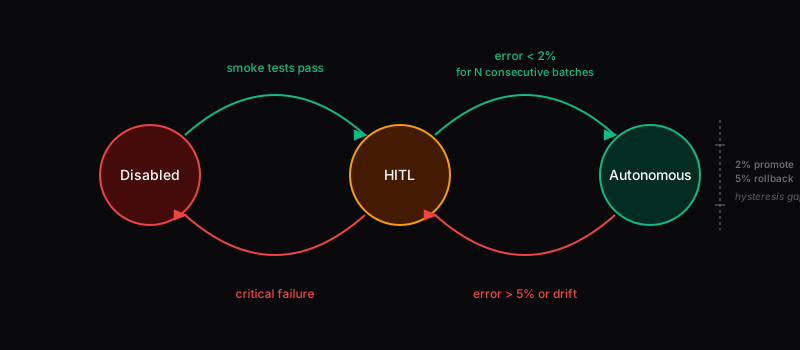
A 3-state progression for safely giving AI more independence. Promote on demonstrated performance, roll back on drift. Formally: Autonomy State Machine.
Compound
· How do you build the appreciating asset?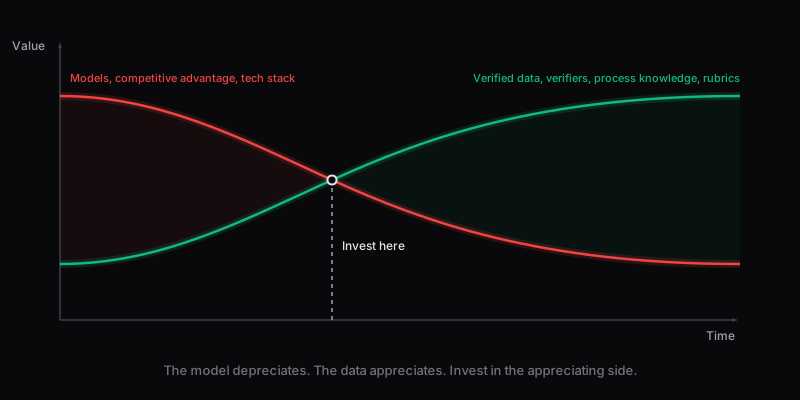
Every piece of knowledge work either compounds or depreciates. Models decay. Data appreciates. Verifiers learn. The dual curve determines where to invest.
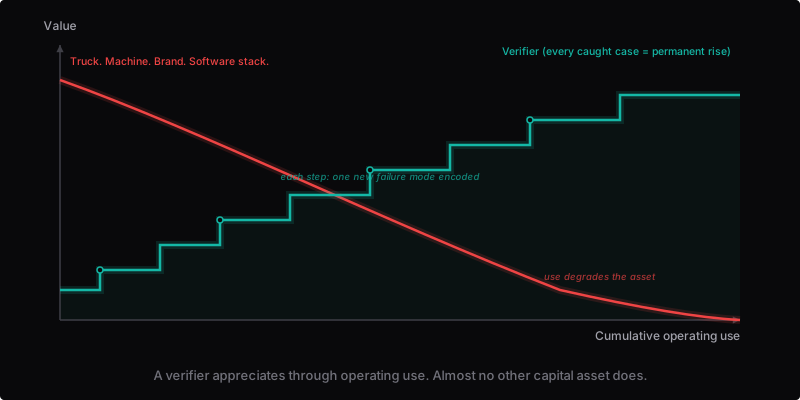
The verifier is one of the only capital assets that appreciates through operating use. Every failure it catches gets encoded; the next run inherits the catch. Use raises the floor instead of lowering it.
Frameworks find it, tools evaluate it
Frameworks tell you where to look for enterprise value. Once you find a soft spot, the AI Operations Tools tell you what to do about it - diagnose, calibrate, invest, value.
The Lexicon defines the shared vocabulary that makes the whole system teachable.