Frameworks
Strategic models for finding enterprise value. Each one answers a different question about where value hides in a business and how to surface it.
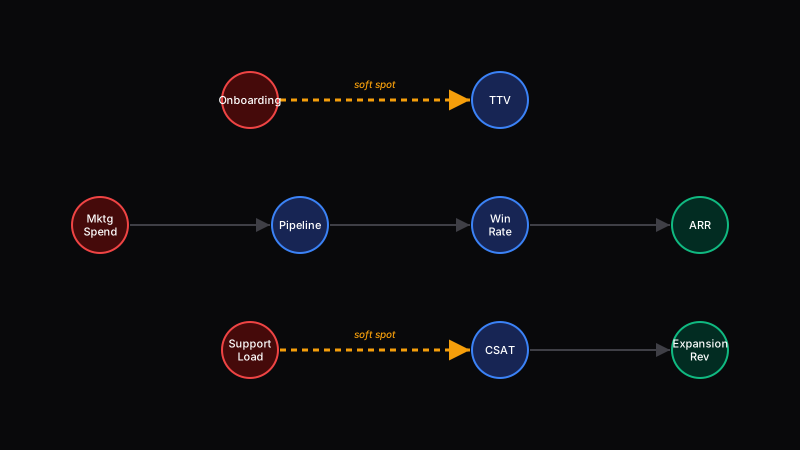
Every cost and revenue line is a node. Every causal relationship is an edge. Walk the graph and find the mispriced edges where value is leaking.
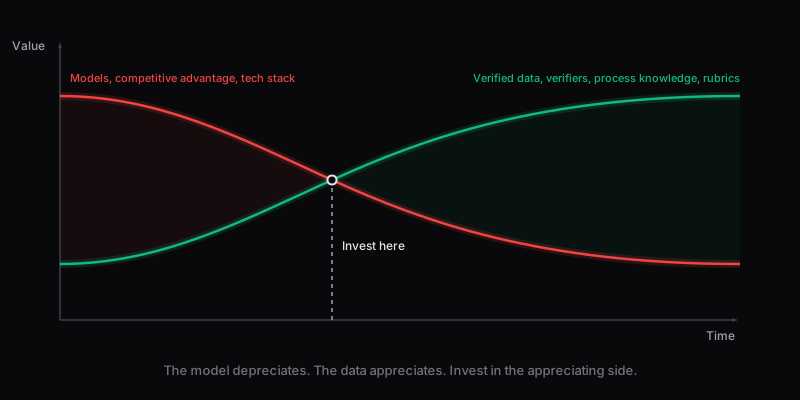
Every piece of knowledge work either compounds or depreciates. Models decay. Data appreciates. Verifiers learn. The dual curve determines where to invest.
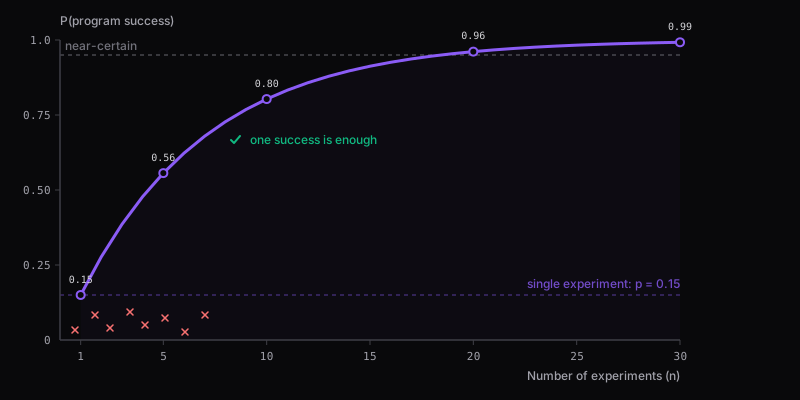
Design the game so that convergence to the desired outcome is a mathematical theorem, not a hope. Mechanism design meets Bayesian ratchet search.
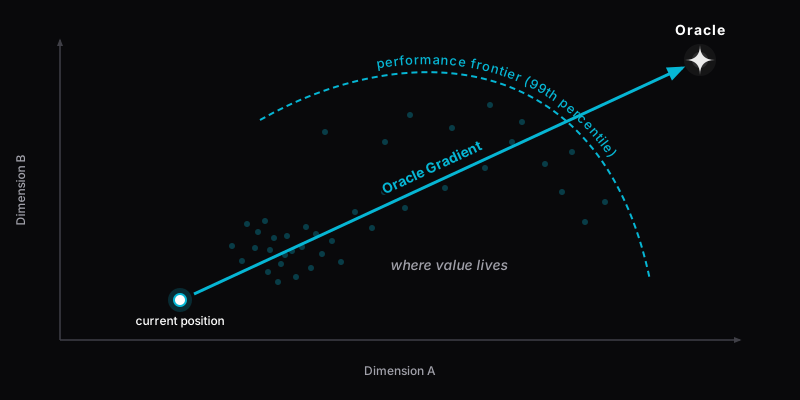
A protocol for locating where excellence lives when nobody agrees what good looks like. Map the distribution, find the 99th percentile, compute the gradient toward it.
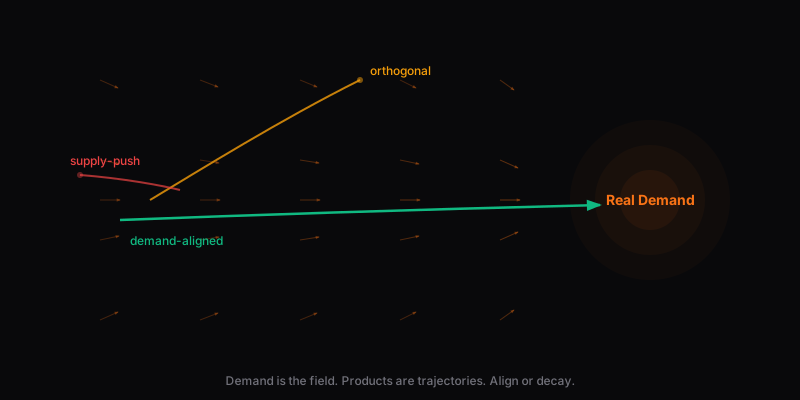
Demand is a force field on your optimization landscape. It is fixed, hidden, and acts on your product whether you measure it or not. Map it or crash into it.
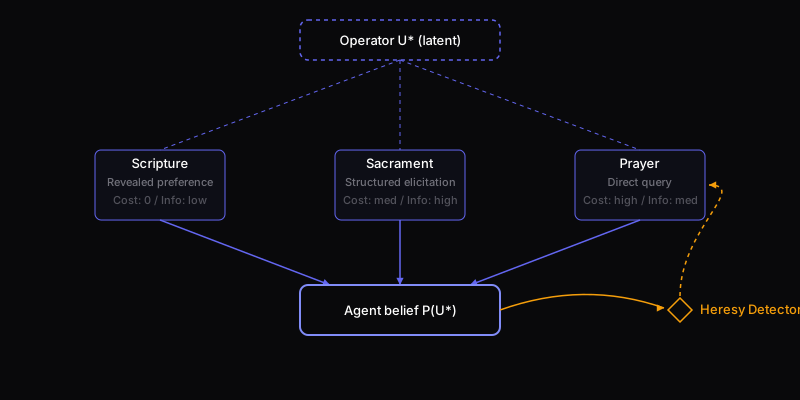
Your AI is trying to serve you but cannot read your mind. Three evidence channels for learning what the operator actually wants: structured elicitation, revealed preference, and direct query.
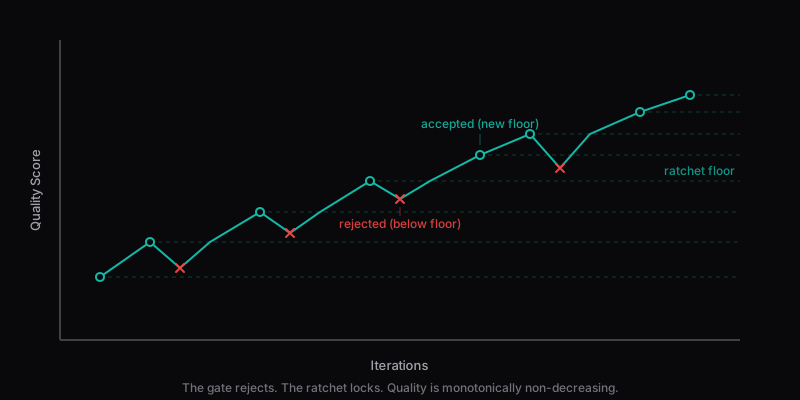
Apply ratcheted quality gates to stochastic agent output. The agent does not need a plan - the gates create ascent. Formally: Quality-SGD.
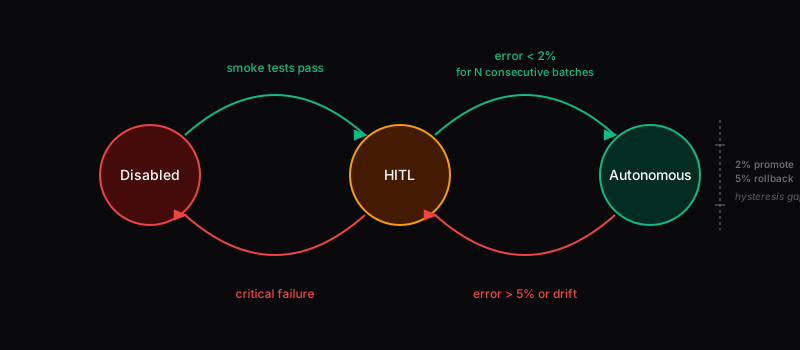
A 3-state progression for safely giving AI more independence. Promote on proven performance, roll back on drift. Formally: Autonomy State Machine.
Frameworks find it. Tools evaluate it.
Frameworks tell you where to look for enterprise value. Once you find a soft spot, the AI Operations Tools tell you what to do about it - diagnose, calibrate, invest, value.
The Lexicon defines the shared vocabulary that makes the whole system teachable.