Construction Spread
S = (annual_value x P(success)) / build_cost. The risk-adjusted return on the capital deployed to build a knowledge asset. Rank opportunities by spread descending. Deploy capital top-down until budget is exhausted.
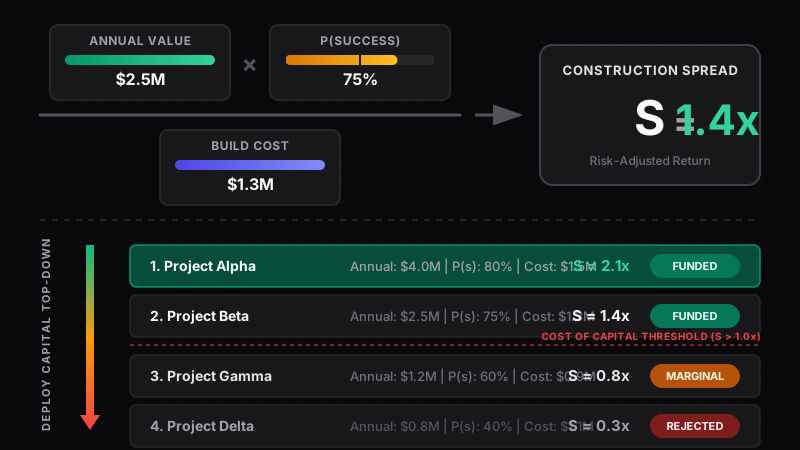
Why It Exists
PE funds rank deals by risk-adjusted return on deployed capital. Knowledge assets are the same asset class with a different depreciation curve. If you can't calculate the spread, you're guessing where to invest.
Rosetta Stone
Four circles, four readings of the same object. Each role reads the artifact through its own lens.
Yield on cost, borrowed from real estate development. Same formula, different asset class. Rank by S descending, deploy top-down until budget is exhausted.
The number that tells you which build the team should do next. It's not the shiniest project; it's the one with the best spread.
Is it worth building? The spread tells you. If annual value times probability of success doesn't cover the build cost with margin, don't start.
A point estimate of risk-adjusted return with variance that depends on the confidence intervals on P(success) and annual_value. Tighter intervals - from Builder experience and Operator data - tighten the spread distribution.
Related Terms
Compile Time - Time spent building systems, frameworks, rubrics, and processes that produce returns across many future periods.
Dual Curve - The simultaneous depreciation of AI models (distribution shift, competitive erosion) and appreciation of knowledge assets (verifiers, labeled corpora, institutional rubrics) - where the appreciating side gets better through operating use, not in spite of it.
Operational Alpha - Excess return on enterprise value generated through systematic identification and capture of mispriced edges in business operations.
Frameworks & Tools
See also
Which bets to make. Capital allocation, M&A due diligence, portfolio construction.
How to execute at scale. Multi-brand portfolio, turnarounds, P&L ownership.
Builds it, ships it, owns it. Solo full-stack, DevOps, production systems.
Proves it, models it, publishes it. Mathematical modeling, Bayesian frameworks.